CERC Celebrates 21 Years of Partnership with GGF at FWC 2026: The Gospel and Orthodoxy and Evangelicalism
13 Mar 2026
By Liew Hong Wei
This year’s FWC was the largest to date, marking a significant milestone in the life of GGF, as they learnt, appreciated and celebrated the thoughts and the lives of 5 Fathers of Church History (Four Patristics and one Medieval Theologian) in their fight for Orthodoxy.
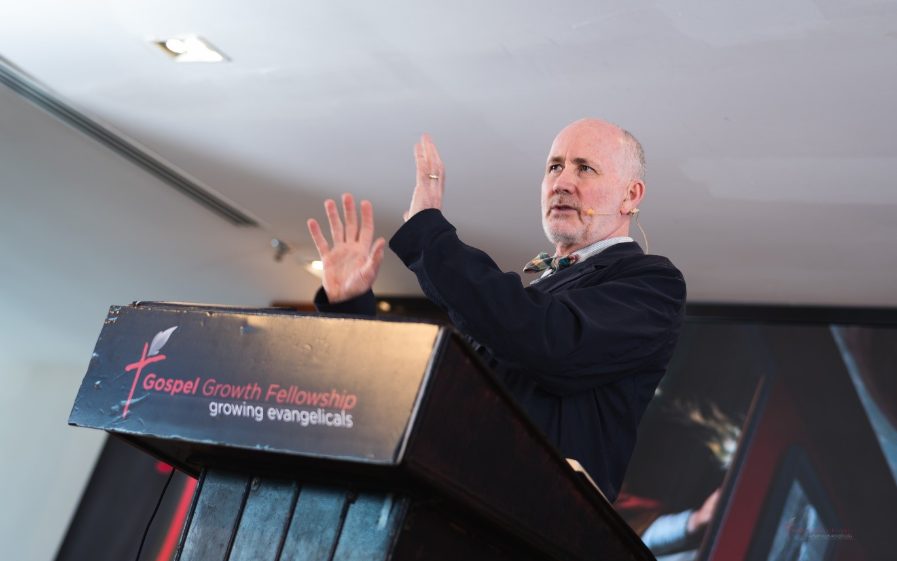
Celebrating with GGF was guest speaker Dr Bradley Green (Advisor for Christian Education of GGF), who flew in from Jackson, Tennessee, to deliver a series of talks on key figures in the history of the Church. Dr Green guided participants through the theological contributions, the posture and fervency in their fight for Orthodoxy.
The Same Theological Fight
“The word “Orthodoxy” is broken down into two components, ortho which means right, and doxa which means worship. Together, it essentially translates to the right worship of God.” Said Dr Green, as he opened the conference with his seminal talk.
With growing threats such as man-centred teaching, historical ignorance, pluralism, and individualism, it is crucial to understand the context behind the orthodox doctrines we have inherited today.
As Dr Greenwrote in his book Shapers of Christian Orthodoxy, which forms the backdrop and basis of the conference:
“I am trying to make a particular point about the importance of learning to think theologically. In the best of theology courses, students are taught the background of theological battles, and the historical exigencies that led to a particular construal of a particular doctrine in a particular way. But at times we learn, or teach theology by giving a “bullet point” summary of the orthodox position, and students are left knowing they are supposed to believe XYZ—say, the Chalcedonian Formula—but have little understanding of the gravitas and significance of such conclusions. And they are not simply lacking this sense of gravitas or significance, but they do not understand how key thinkers came to such conclusions in the first place. As a result, I suspect many students conclude that they know they should believe the Chalcedonian Formula, if only because Dr. Smith says so, and perhaps they admire, or at least somewhat trust, Dr. Smith (you fill in the name).’
The concerns shared by the Church Fathers millennia ago (and Anselm a few hundred years ago) ought to be the same concerns adopted by us — the glory of God through his Scriptures, for the love and perseverance of His church.
Dr Green in his seminal talk, introducing participants to the Church Fathers and the Conference as a whole
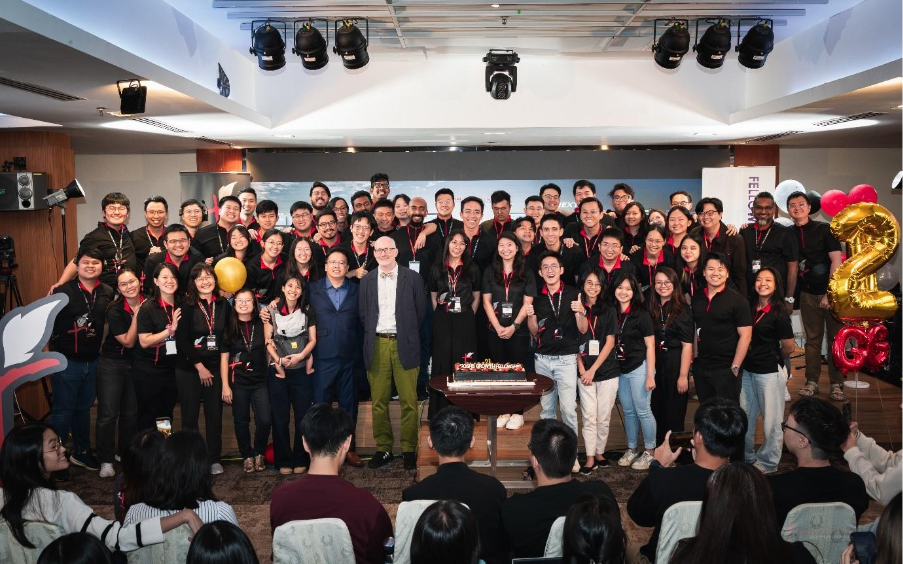
Dr Green with the partners of GGF
Learning from the Church Fathers
Reflecting on the purpose of the conference, Dr Green shared:
“The goal for this conference is to appreciate the truth worked out in the four Church Fathers (Patristics) of Irenaeus, Tertullian, Augustine, Athanasius, and a medieval theologian, Anselm.”
Throughout the conference, emphasis was placed on learning not just what the Church Fathers taught, but how they contended for truth. Participants read texts by the Church Fathers, engaging with primary sources and digging in to how they fought the travails of their day.
Amidst the threats towards the church, participants saw that the fight for Orthodoxy is not new, but one that recurs in every generation, especially ours.
Orthodoxy and the Challenge of Evangelicalism Today
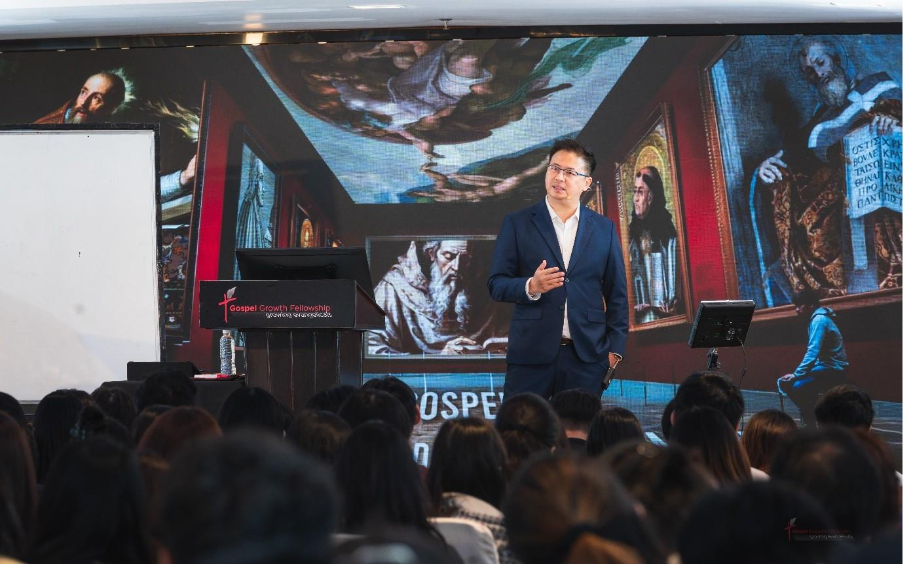
Pastor Robin Gan in the final talk: the Gospel and Malaysian Evangelicalism
The final plenary was delivered by Pastor Robin Gan, producer of GGF, who addressed the state of Malaysian evangelicalism and drew together the theological threads of the conference. He urged participants to consider that the fight today is not over, but it has merely evolved into its modern variants that plague the church today.
A common thread of the heresies for the past 2000 years is the need for Christians to be understood. In the Patristic era, Gnosticism blended Greek Philosophy and Christianity. Similarly, liberalism infected the church by rampant individualism and autonomous reasoning.
Pastor Robin noted:
“History is like clockwork. It’s the same pattern and impulse that happens in every generation. Christians want the world to understand them. It’s your encouragement that you are not going to be understood. That’s why we are fighting the same fights today. This conference is all about framing our current context: what it means to struggle for Christianity today.”
He further described the spirit of FWC as a call to unity:
“The nature and spirit of FWC is the call for all who care about Christianity and the gospel in Malaysia to keep working together for this great purpose.”
A Conference That Humbled and Challenged
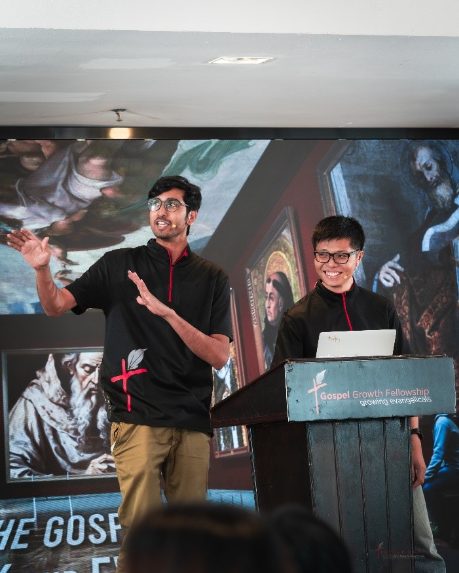
Assistant Producer Marc Miller and Director Andy Goh
Andy Goh, Director of the conference, expressed gratitude for God’s work throughout the event:
“I’m thankful to God that it’s the biggest FWC thus far. Many shared that their minds were stretched and that they were challenged to see that they were not always in line with the Patristics. As they saw how the Church Fathers searched the Scriptures with humility, they were discovering faith, seeking understanding.”
He added that many participants left with a renewed burden:
“There was a strong sense of, ‘Come on, we have to do better for the churches and evangelicalism today.’”
Reflections from Participants
The conference left a deep impression on many attendees. Khloe reflected on the difficulty of preserving a God-centered gospel:
“Through learning the history of the Church Fathers, I have realised how difficult it is to preserve a God-centered gospel. In subtle ways, we drift toward man-centeredness. We must hold firmly to the reality that we are all beggars who deserve hell. We do ministry not to earn God’s favor, but because we love Him and obey His command.”
Simeon, a first-time FWC participant, shared:
“The teaching on Orthodoxy and Evangelicalism truly opened my eyes. Learning about the Church Fathers, who defended sound doctrine for thousands of years, has challenged me to hold firmly to Scripture and to boldly share the truth today. I’m already looking forward to FWC 2027.”
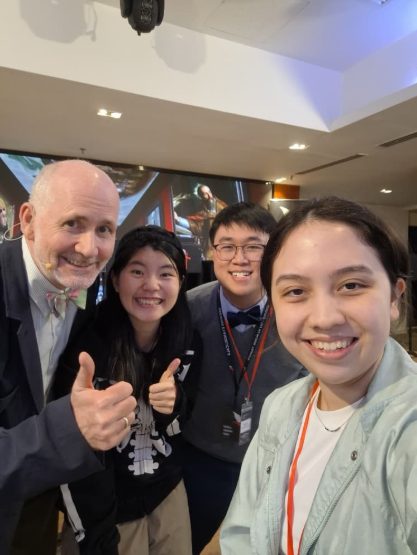
Kelly Chew (pictured above: second from the left), a long time FWC participant, reflected that FWC challenged her attitude towards God’s nature:
“FWC has humbled and helped me appreciate the importance of church history, which in turn led me to see the gloriousness of God’s complex nature.
I used to secretly loathe the fact that God is this complex and unfathomable being. How can an infinite God expect a mere mortal—finite and limited like myself— know him, when even the best of mankind has yet to fully understand all of creation throughout the span of thousands of years? Why couldn’t things be as simple as just knowing and saying the right stuff?
Yet the immense contrast of the posture exemplified by the church fathers both convicts and humbles me. When I saw how the church fathers yearned and longed to know God, how deeply they desired for others to know Him as well, and how they spent their entire lives fighting against heresy, I began to see God’s grace. I saw this is what is needed, this is what it took, for us to have what we have today: for the church to confidently confess our apostolic roots and foundation.
This is grace – that God would preserve His truth across time, using weak & flawed men to contend for truth, allowing us to share in His mind and reasoning, allowing someone like me living in an age of illiteracy, ignorance, and indifference to share in this privilege and inheritance.
“We stand on the shoulders of giants”, a phrase I had heard long ago, now finally sinks in.
I want to know God as my Father, Creator, Lord, and King, the way the church fathers did, not merely for knowledge, not only to be equipped to defend the truth, but because I desire to know my big and awesome God.”
Looking Ahead
As CERC celebrates 21 years of partnership with GGF, the 2026 Fellow Worker’s Conference served as both a thanksgiving and a summons — a reminder that faithfulness to the gospel requires perseverance, humility, and courage. Grounded in Scripture and informed by history, CERC and GGF remain committed to contending for orthodoxy and proclaiming the gospel for the good of the Church and the glory of God.
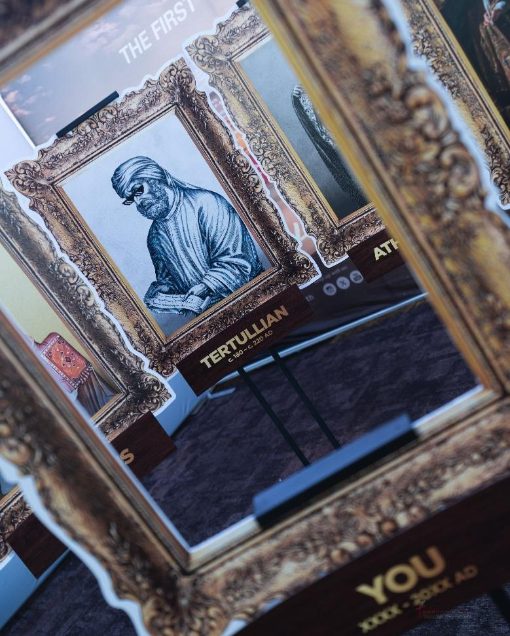
Décor showcasing Tertullian within the frame “you”, symbolising the need for us to emulate Tertullian’s struggle for Orthodoxy